Lars Bennett · 25 September 2026
Exploring Data Patterns in Crawl Efficiency for Large-Scale Websites
Search engine crawlers allocate finite resources across millions of pages on large-scale websites, and data patterns in crawl efficiency reveal how those resources get distributed over time. Analysts examine server logs, response codes, and timing metrics to map which sections receive frequent visits while others sit untouched for weeks. These patterns often align with content update cycles, internal link structures, and external signals that influence discovery rates.
Core Metrics That Shape Crawl Behavior
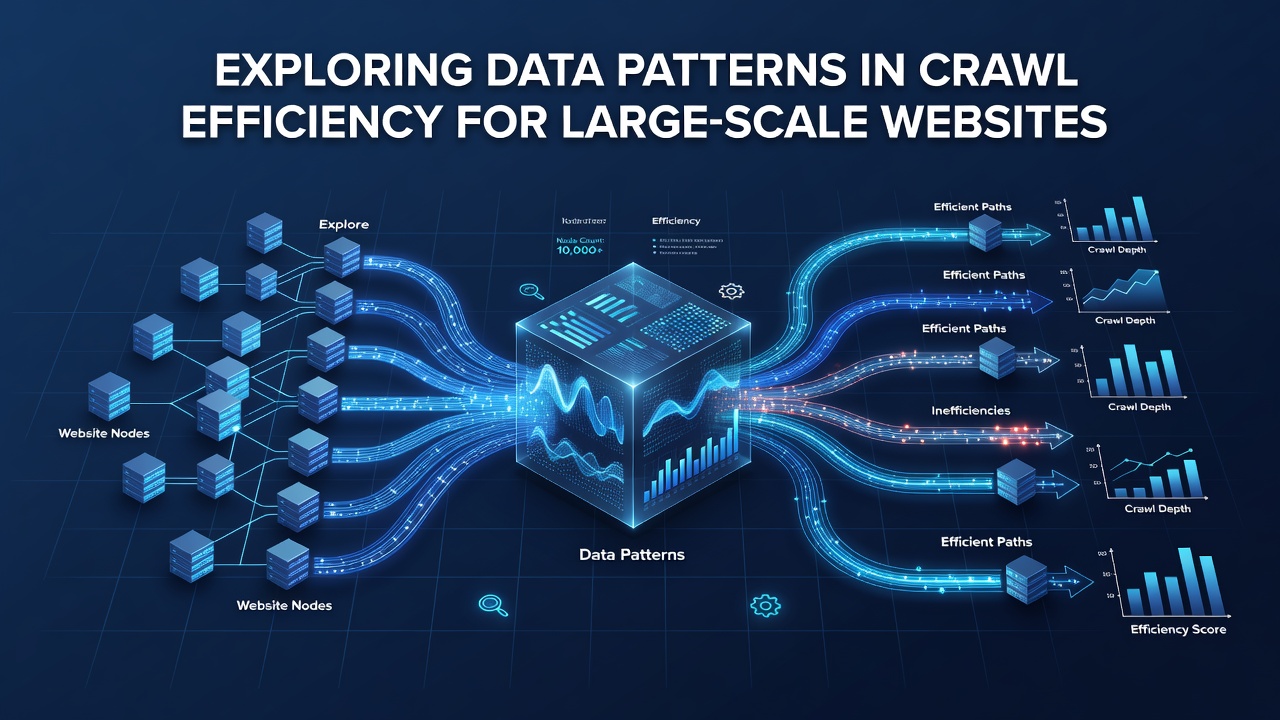
Researchers track crawl frequency by recording each bot request timestamp alongside the HTTP status returned, and they cross-reference those entries with sitemap submissions and robots.txt directives. Average crawl depth per subdomain emerges as a key indicator because sites that push new content deep in their architecture see uneven distribution of visits. Response time distributions further clarify efficiency since pages that load slowly under load tend to receive fewer subsequent requests once patterns stabilize.
Data sets collected over multi-month periods show recurring clusters where news sections receive daily crawls while archive pages see activity only after new backlinks appear. Those who've studied this know that error rate spikes, particularly 5xx responses, create temporary dips in crawl volume that can last several days until the site stabilizes again.
Log Analysis Techniques for Pattern Detection
Teams parse raw access logs using timestamp bucketing to isolate daily versus weekly crawl rhythms, and they layer in user-agent strings to separate Googlebot from other engines. Heatmap visualizations of URL paths highlight corridors that experience consistent attention, while isolated directories remain dormant. Statistical clustering methods group pages by crawl interval, allowing observers to correlate those groups with factors like page age, word count changes, and internal link velocity.

One study revealed that sites exceeding one million indexed URLs often display fractal-like patterns where subfolders mirror the crawl behavior of the root domain at smaller scales. Analysts apply time-series decomposition to separate seasonal effects from baseline activity, revealing how holiday promotions or product launches temporarily shift crawler focus toward commerce paths.
External Factors Influencing Distribution
External signals such as fresh backlinks and social mentions accelerate discovery for specific pages, yet the effect diminishes once the crawler has registered the new content. According to documentation from Google Search Central, server capacity and crawl delay settings directly modulate how aggressively bots request resources during peak periods. Geographic server location also plays a role because latency differences between data centers can alter the order in which regional crawlers process the same domain.
Academic work from institutions like the University of Waterloo has examined how XML sitemap freshness correlates with crawl coverage rates across enterprise news properties. Their findings indicate that daily sitemap updates paired with consistent lastmod timestamps produce tighter alignment between published content and crawler visits. Meanwhile, sites that neglect sitemap hygiene experience lag where newly published URLs wait longer for initial indexing.
September 2026 Developments in Crawl Data Tools
As of September 2026, updated reporting interfaces in major webmaster consoles introduced granular breakdowns of crawl budget consumption by content type, allowing teams to isolate video pages from static articles in the same dataset. These enhancements build on earlier log file analysis practices and provide exportable JSON streams that feed directly into custom dashboards. Observers note that the added granularity helps large sites identify under-crawled product variants that previously blended into aggregate metrics.
Practical Applications of Pattern Insights
Teams that map these patterns adjust internal linking hierarchies to surface important but infrequently crawled sections, and they implement targeted canonical tags to reduce duplicate crawl effort. Monitoring shifts in crawl frequency after structural changes provides feedback loops that confirm whether adjustments improved efficiency. Data indicates that sites maintaining consistent XML sitemap updates alongside clean URL parameters achieve more predictable crawl distributions over extended observation windows.
Conclusion
Patterns extracted from crawl data offer measurable signals about how search engines allocate attention across expansive websites. By combining log analysis with external metrics and updated tooling available in September 2026, organizations obtain clearer visibility into which pages receive resources and which remain overlooked. Continued examination of these distributions supports ongoing refinements in site architecture that align published content with crawler priorities.