
Nils Schmitz · 23 October 2026
Navigating Metadata Evolution in Platform Ecosystems for Niche Content Sites
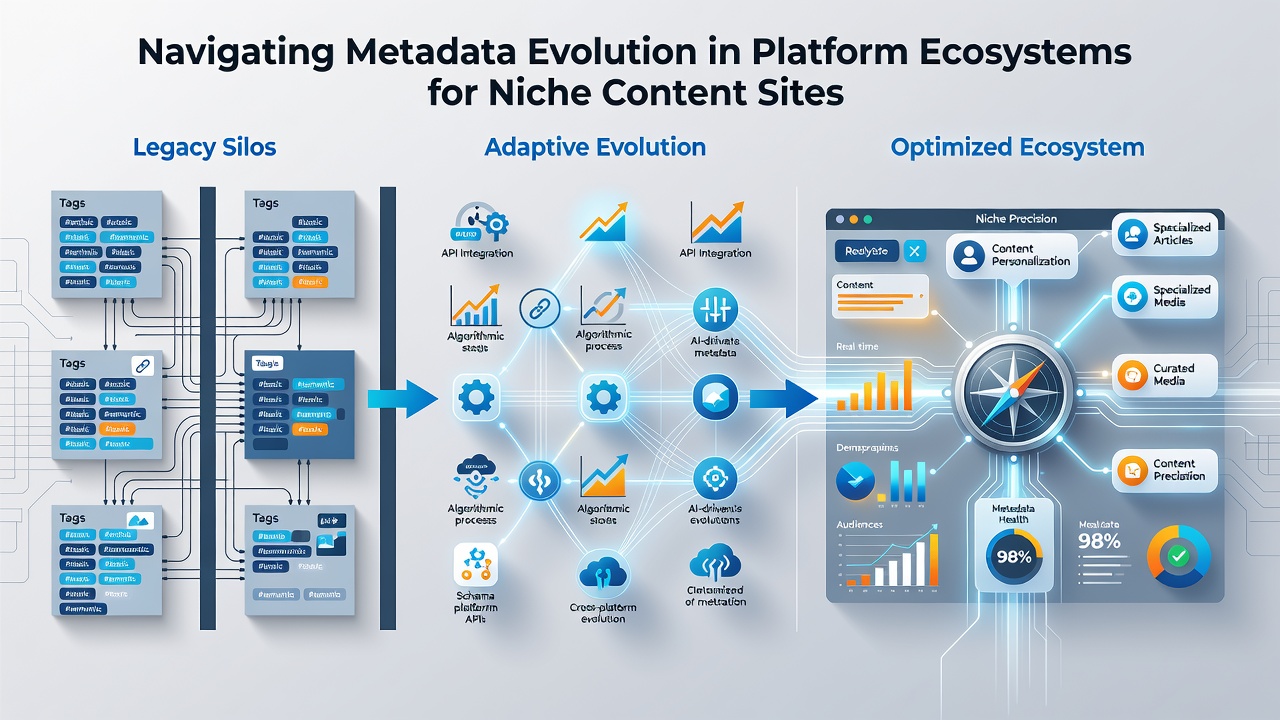
Platform ecosystems have driven substantial changes in how metadata functions for niche content sites since the early 2010s, with standards expanding from basic HTML meta tags to complex structured data formats that support discovery, sharing, and integration across multiple services. Researchers at academic institutions documented the shift toward JSON-LD implementations, which allow sites focused on specific topics such as vintage computing or regional cuisine to embed detailed information that search engines and social platforms can parse consistently.
Early Developments in Metadata Standards
Initial metadata practices relied on Dublin Core elements and simple Open Graph tags, yet platform growth introduced requirements for richer schemas that accommodate multimedia and user-generated elements. Data from industry reports indicate that adoption of schema.org vocabularies increased steadily among specialized publishers, enabling better representation of content categories like archival photography collections or independent music reviews. Those who manage niche sites often integrate these elements to maintain visibility when algorithms prioritize signals from interconnected services.
Platform-Specific Requirements and Integration
Major ecosystems such as those operated by search providers and social networks established distinct metadata protocols that niche operators must address simultaneously. For instance, video platforms updated their embedding specifications in recent years to include temporal and licensing fields, while image-sharing services emphasized rights metadata to comply with emerging digital asset regulations. Studies from European research centers show that sites covering narrow subjects benefit when metadata aligns with both general web standards and platform extensions, reducing mismatches during content distribution.
Adaptations Observed Through 2026
As of October 2026, updates to core web standards continue to influence how niche sites handle evolving data fields, particularly with expansions in entity recognition and cross-platform linking. Observers note that smaller operations focused on topics like sustainable agriculture or retro gaming hardware have incorporated additional properties related to sustainability certifications and provenance tracking. Figures from global digital economy analyses reveal that consistent metadata application correlates with improved indexing across distributed platform networks, although implementation varies by site scale and technical resources.
One documented case involves a specialized forum dedicated to historical map restoration that revised its metadata framework to support linked data connections with external archives, resulting in enhanced referral traffic from multiple discovery tools. Such adaptations demonstrate how platform ecosystems reward precise, updatable metadata structures that reflect content specificity without requiring large development teams.
Technical Considerations for Sustained Compatibility
Niche content sites encounter ongoing needs to monitor changes in metadata validation tools and schema extensions released by standards bodies. Canadian regulatory documentation on digital content management highlights the role of persistent identifiers in maintaining accuracy when platforms revise their ingestion processes. Those responsible for site maintenance frequently combine automated validation scripts with manual reviews to address discrepancies that arise from simultaneous updates across search, social, and aggregation services.
Academic papers published through Australian university consortia describe testing protocols that evaluate metadata performance under simulated platform load conditions, providing benchmarks for sites with limited audiences. These evaluations focus on elements such as author attribution, content freshness indicators, and relationship mappings that platforms use to rank and surface specialized material.
Conclusion
Metadata evolution within platform ecosystems presents a continuing set of technical and structural adjustments for operators of niche content sites. Evidence from standards organizations and research groups shows that alignment with updated schemas supports sustained discoverability, while geographic variation in regulatory expectations adds further layers to implementation planning. Continued observation of platform announcements remains essential for maintaining compatibility as ecosystems expand their data requirements.