Frankie Fischer · 11 September 2026
Redirect Mapping Techniques That Help Preserve Organic Traffic Flows During Site Relocations
Site relocations require careful redirect mapping to maintain organic traffic, and experts in digital migration note that proper planning starts with a complete inventory of all existing URLs along with their associated metrics such as page views, bounce rates, and keyword rankings. Teams compile this data from analytics platforms and crawl reports before any structural changes occur, which allows them to identify high-value pages that drive the majority of search visibility while also flagging low-traffic URLs that still carry historical link equity.
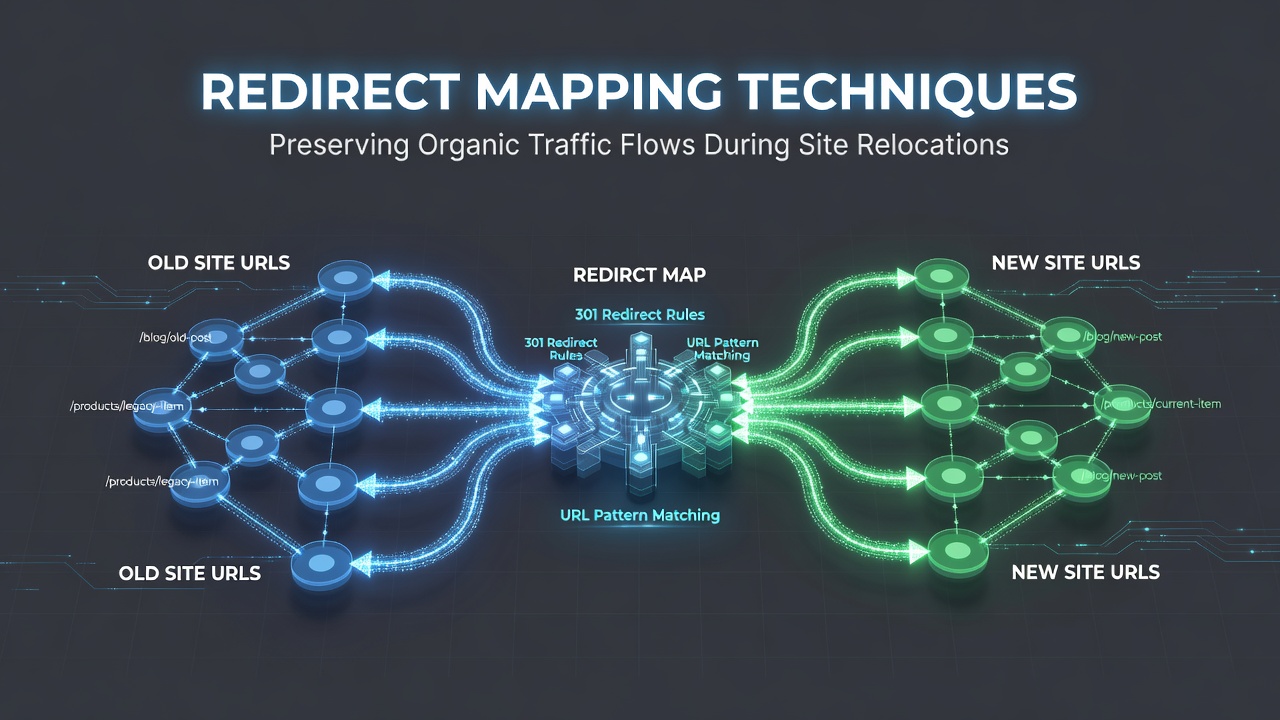
Researchers who have examined large-scale migrations report that one-to-one 301 redirects remain the standard for preserving ranking signals, yet they also highlight situations where wildcard or pattern-based rules can handle thousands of similar URLs efficiently without manual intervention. The process involves matching old paths to new equivalents based on content similarity, and this matching reduces the risk of diluting authority across broken or irrelevant destinations. Data from industry reports indicates that sites which implement comprehensive mapping before launch experience smaller drops in organic sessions compared to those that rely on generic catch-all redirects.
Core Components of Effective Redirect Mapping
Professionals begin by exporting URL lists from tools that crawl both the legacy site and the new environment, then they cross-reference these lists against server logs and search console data to confirm which addresses receive consistent crawler attention. This cross-referencing reveals patterns in crawl budget allocation, and it helps prioritize redirects for pages that search engines have indexed most frequently. Observers note that September 2026 brought updated documentation from major search providers emphasizing the need for redirect chains to stay under three hops, a guideline that encourages direct mapping wherever possible.
Mapping spreadsheets typically include columns for old URL, new URL, redirect type, HTTP status expectation, and notes on content equivalence, while automated scripts validate these entries against live responses after deployment. Teams often test a sample set of redirects in a staging environment first, and this step catches issues such as incorrect destination paths or unintended loops before they affect live traffic. Academic studies on web infrastructure changes show that sites using systematic validation experience faster recovery in indexing rates following relocation.
Tools and Methods Used in Practice
Specialized crawling software generates comprehensive inventories that feed directly into mapping workflows, and integration with analytics platforms adds traffic volume and conversion data to each row. Developers then apply regular expressions to handle bulk patterns such as category restructures or date-based archives, which reduces manual effort while maintaining precision. Figures from web performance analyses reveal that organizations adopting these combined approaches see measurable retention of referral traffic from external links that point to legacy addresses.
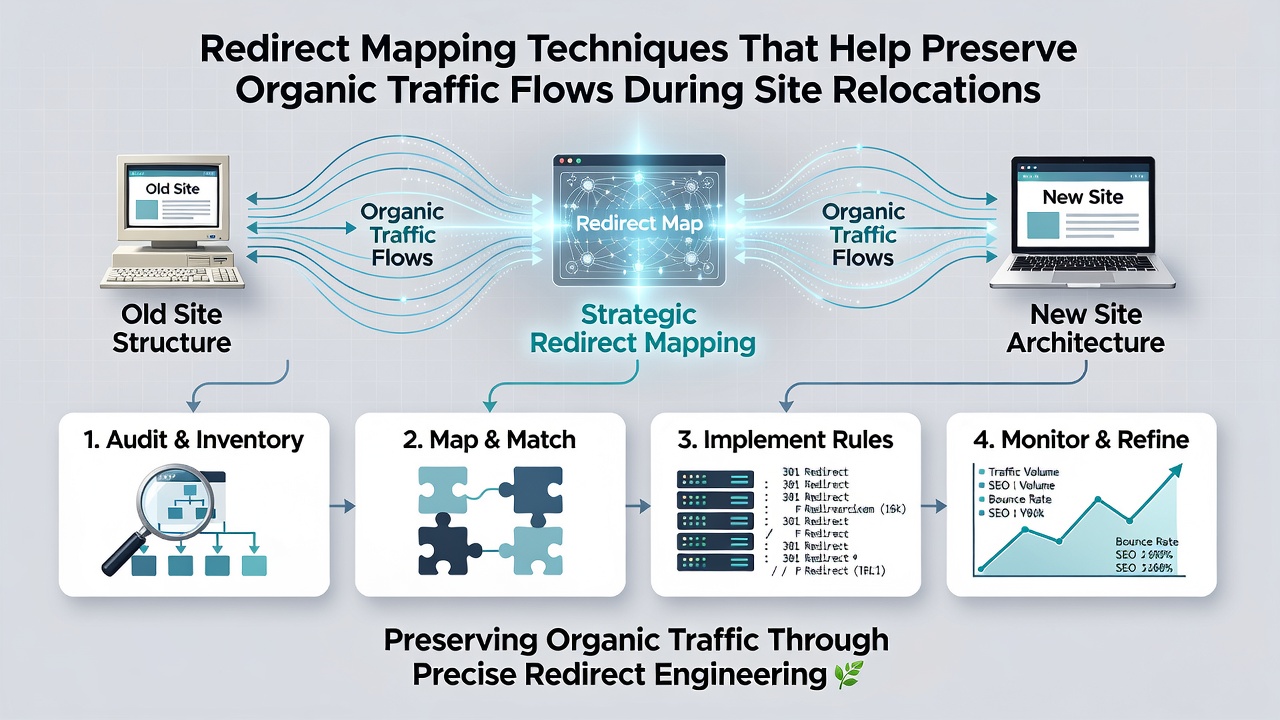
Monitoring continues after launch through real-time dashboards that track 404 errors and redirect success rates, and teams adjust mappings when unexpected content gaps appear. External sources such as the Google developer documentation on redirects provide technical specifications that guide implementation across different server configurations. Another reference point comes from research published by the European Commission on digital infrastructure, which examines how consistent URL continuity supports broader online accessibility standards.
Handling Edge Cases During Relocations
International sites introduce additional complexity because language variants and regional subdirectories must map correctly to avoid sending users to mismatched content, and experts recommend separate mapping tables for each locale to maintain relevance signals. Parameter-heavy URLs from legacy e-commerce systems require normalization rules that strip tracking codes while preserving core paths, and this normalization prevents duplicate content issues that could fragment ranking power. Those who have studied migration outcomes emphasize logging every redirect response code so that anomalies surface quickly during post-launch audits.
Conclusion
Redirect mapping techniques combine detailed data collection, pattern-based automation, and ongoing validation to protect organic traffic during site relocations, and the methods described here reflect practices documented across technical literature and search provider resources. Organizations that invest in these structured approaches position their new domains to retain visibility while minimizing disruption for both users and crawlers.